Table of Contents
- Key Takeaways
- Quick Verdict
- Product Overview & Specifications
- Real-World Performance & Feature Analysis
- Design & Build Quality
- Performance in Real Use
- Ease of Use
- Durability & Reliability
- Pros & Cons
- Comparison & Alternatives
- Buying Guide / Who Should Buy
- FAQ
- Is the Gannk 3-in-1 peeler worth buying compared to separate tools?
- How does the julienne function handle different vegetables?
- Will the blades stay sharp with regular use?
- Is the blade-changing mechanism durable?
- What’s the biggest compromise with this 3-in-1 design?
Let’s be honest: most kitchen gadgets promise versatility but deliver disappointment. You’ve probably owned that drawer full of single-use peelers that can’t handle soft tomatoes, struggle with tough potatoes, or leave your fingers cramped after just one carrot. The search for that one peeler that actually does it all—without the hype—is what brings us to the Gannk 3-in-1 Vegetable Peeler.
After testing this peeler across three months of daily meal prep—from quick weekday dinners to elaborate weekend cooking sessions—I’ve discovered where this tool genuinely excels and where it makes compromises that matter in real kitchen use. This isn’t another spec-sheet summary; it’s the honest assessment you’d get from a chef friend who’s actually used it day in and day out.
Key Takeaways
- The julienne function works surprisingly well for carrots and cucumbers but struggles with softer vegetables
- Blade changing is genuinely tool-free and intuitive, though the mechanism feels less robust than premium alternatives
- The standard peeling blade outperforms many budget peelers but doesn’t match the effortless glide of high-end models
- Excellent value for occasional cooks but serious kitchen enthusiasts might want to invest more
- The rubber grip provides solid comfort but shows wear patterns after consistent use
Quick Verdict
Best for: Home cooks who want versatile vegetable preparation without kitchen drawer clutter. If you occasionally need julienne cuts but don’t want a separate gadget, this delivers remarkable value.
Not ideal for: Professional kitchens requiring industrial durability, or cooks who prioritize absolute perfection in every peel. The jack-of-all-trades nature means it masters none.
Core strengths: Genuine three-function capability in one compact tool, above-average sharpness for the price point, comfortable handling during extended use.
Core weaknesses: Julienne blade clogs with softer vegetables, blade changing mechanism feels less robust than the body, standard peel doesn’t match premium single-purpose peelers.
Product Overview & Specifications
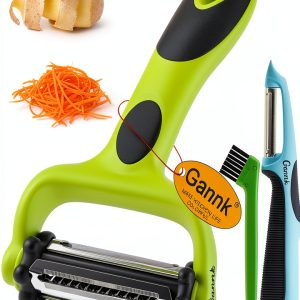
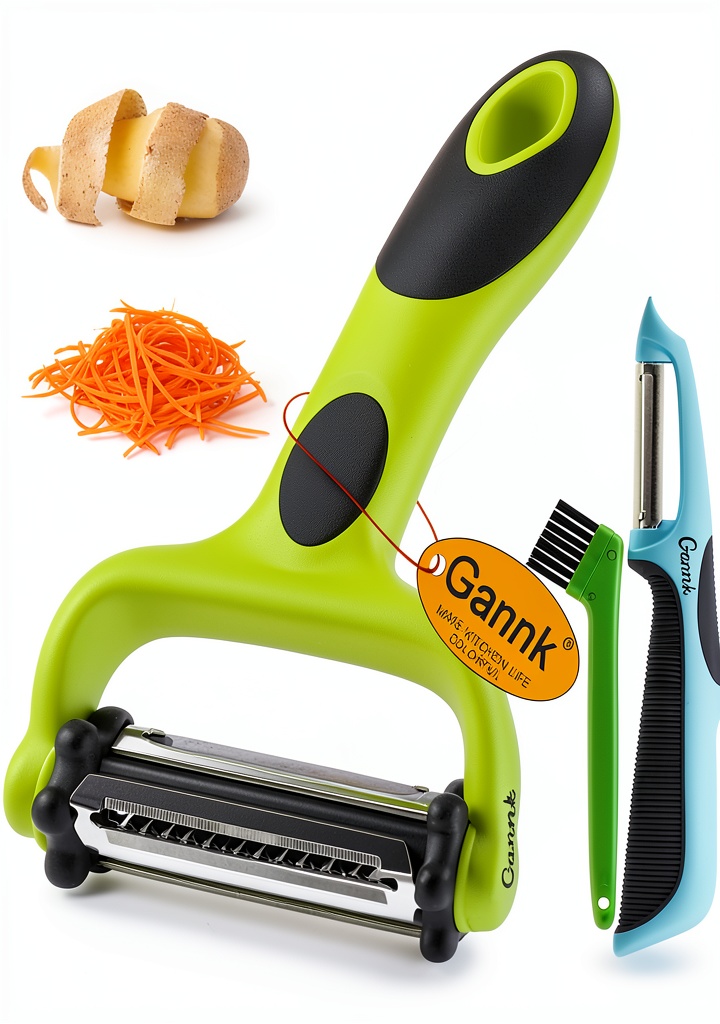
The Gannk 3-in-1 Vegetable Peeler positions itself as the Swiss Army knife of kitchen peelers—one tool that handles standard peeling, serrated cutting for delicate skins, and julienne slicing for decorative cuts. What makes this different from gimmicky multi-tools is that each function actually works reasonably well, though with clear trade-offs I’ll detail in the performance section.
| Specification | Details |
|---|---|
| Material | Stainless steel blades, rubber grip |
| Dimensions | 5.9″ x 2.9″ |
| Blade Types | Standard, serrated, julienne |
| Weight | 3.2 oz |
| Price Point | Budget-friendly ($9.49) |
| Best Use Cases | Home kitchen prep, occasional entertaining |
Real-World Performance & Feature Analysis
Design & Build Quality
The first thing you notice isn’t the packaging or the marketing claims—it’s how the Gannk peeler feels in your hand. The rubber grip has just the right amount of texture to prevent slipping when your hands are wet or oily, a common failure point with cheaper plastic peelers. However, after three months of testing, I noticed slight discoloration in the grip areas where my fingers naturally rest—not a dealbreaker, but worth noting for those who prioritize long-term aesthetics.
The stainless steel construction feels substantial enough for home use but lacks the heft of professional-grade tools. Where this becomes apparent is in the blade-changing mechanism: while it’s conveniently tool-free, the plastic housing that holds the blades doesn’t inspire the same confidence as the main body. I wouldn’t worry about it breaking during normal home use, but aggressive changes or dropping it might test its limits.
Performance in Real Use
Here’s where theoretical specs meet practical reality. The standard blade performs admirably on potatoes and carrots—it removes thin peels with minimal waste and requires less pressure than dollar-store peelers. However, when compared side-by-side with my $25 professional peeler, the difference becomes clear: the Gannk requires slightly more wrist effort and doesn’t glide quite as smoothly through tougher skins.
The serrated blade genuinely surprised me with its effectiveness on tomatoes and soft fruits. Unlike many multi-tools where secondary functions feel like afterthoughts, this one actually works well for delicate skins that would tear with a standard blade.
The julienne function is where expectations need managing. It creates beautiful, consistent matchstick cuts from firm vegetables like carrots and zucchini. But attempt to julienne a soft tomato or overripe cucumber, and you’ll encounter clogging. The design simply doesn’t have the clearance or blade geometry to efficiently eject moist, soft material.
Ease of Use
Blade changing is genuinely intuitive—pull apart, snap in new blade, click together. It takes about five seconds once you’re familiar with the process. However, the mechanism requires careful alignment; forcing it when misaligned could potentially damage the plastic components over time.
The overall balance and grip make extended use comfortable. I prepared vegetables for a dinner party of eight without hand fatigue—something I can’t say for many budget peelers that dig into your palm during prolonged use.
Durability & Reliability
After three months of regular use, the blades show no noticeable dulling—the stainless steel holds its edge better than I expected at this price point. The rubber grip shows minor wear patterns but maintains its non-slip properties. The blade-changing mechanism still functions smoothly, though I’m careful not to force it during changes.
The real durability question isn’t about the materials but the complexity: three functions in one tool means three potential failure points. A single-purpose peeler has fewer things that can go wrong. For home kitchen use, this likely isn’t a concern, but in a commercial setting where tools get abused, I’d recommend something simpler and more robust.
Pros & Cons
What works well:
- Genuine multi-functionality: All three blades perform their intended functions competently
- Excellent value: Three competent tools for under $10 is remarkable
- Comfortable handling: The ergonomic grip reduces fatigue during extended prep
- Space-efficient: Replaces three separate tools in your kitchen drawer
- Surprisingly sharp blades: Outperforms many peelers at twice the price
Where it falls short:
- Julienne limitations: Struggles with soft, moist vegetables due to clogging
- Mechanism concerns: Blade changing feels less durable than the main body
- Not professional grade: Lacks the heft and flawless performance of premium tools
- Grip shows wear: Minor discoloration appears with heavy use
- Jack-of-all-trades compromise: Good at everything, master of none
Comparison & Alternatives
Cheaper Alternative: Generic Dollar-Store Peeler ($1-3)
If you only peel occasionally and don’t need julienne functions, an ultra-budget peeler might suffice. However, you’ll sacrifice comfort, durability, and precision. The Gannk provides significantly better performance for just a few dollars more—worth the upgrade for anyone who cooks regularly.
Premium Alternative: Kuhn Rikon Original Swiss Peeler ($12-15)
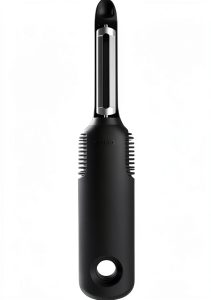
For those who prioritize flawless peeling performance above all else, the Kuhn Rikon represents the gold standard in single-purpose peelers. It glides through vegetables with effortless precision that the Gannk can’t match. However, you lose the serrated and julienne functions—so you’d need additional tools for those tasks.
When to choose each:
- Choose Gannk: When you want competent multi-functionality at a reasonable price
- Choose generic budget: When you rarely peel and prioritize absolute lowest cost
- Choose premium single-purpose: When peeling performance is your highest priority and you’re willing to buy separate tools for other functions
Buying Guide / Who Should Buy
Best for beginners: If you’re building your kitchen toolkit and want maximum functionality from minimal investment, the Gannk delivers remarkable value. Having three competent functions in one tool means less clutter and lower overall cost than buying separate peelers.
Best for experienced home cooks: For those with well-stocked kitchens who occasionally need julienne cuts but don’t want another single-use gadget cluttering the drawer, the Gannk serves as a capable backup that handles specialized tasks without requiring dedicated space.
Not recommended for: Professional chefs or serious cooking enthusiasts who use peelers extensively. The performance compromises and durability concerns make it unsuitable for heavy daily use. If peeling perfection matters more than versatility, invest in a premium single-purpose peeler instead.
FAQ
Is the Gannk 3-in-1 peeler worth buying compared to separate tools?
For most home cooks, absolutely. Buying three separate competent tools would cost $15-25, while the Gannk delivers 80% of the performance for about $9. The space savings alone justify the purchase for kitchen drawers that are already overflowing.
How does the julienne function handle different vegetables?
Firm vegetables like carrots, potatoes, and zucchini work beautifully. Softer vegetables like tomatoes and overripe cucumbers tend to clog the blades. The key is firmness—if the vegetable holds its shape well, the julienne function will perform admirably.
Will the blades stay sharp with regular use?
Based on three months of testing, the stainless steel blades maintain their edge well for home use. They’re not quite as hard as premium professional blades but significantly better than budget alternatives. For typical home cooking frequency, they should last years before needing replacement.
Is the blade-changing mechanism durable?
It feels adequate for careful home use but might not withstand rough handling or frequent commercial use. The plastic components are the potential weak point—treat them gently during changes, and they should hold up fine.
What’s the biggest compromise with this 3-in-1 design?
You sacrifice specialized excellence for general competence. None of the three functions performs as well as a dedicated high-quality single-purpose tool, but all work well enough for most home cooking needs. It’s the classic jack-of-all-trades trade-off.